








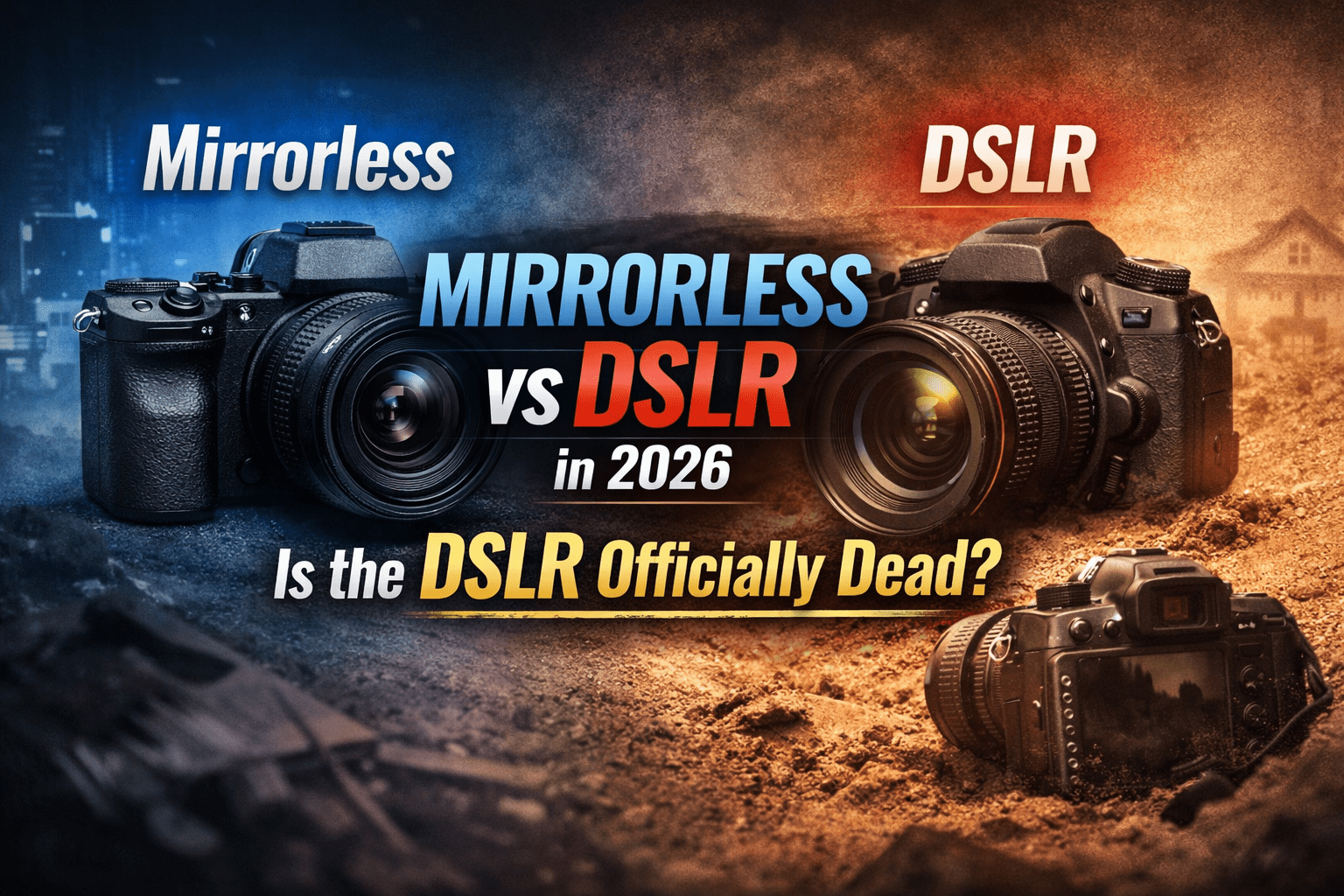
Mirrorless vs DSLR in 2026: Is the DSLR Officially Dead?

If you’re shopping for a digital camera in 2026, you’ve probably noticed something:
most “new” buzz is about mirrorless cameras. So… does that mean DSLR cameras are finished?
The honest answer: DSLRs aren’t dead—but mirrorless has become the main direction for most brands.
The good news is that this gives buyers more choices than ever, whether you’re a beginner, a vlogger, a hobbyist,
or a working pro.
Why mirrorless took over (and why it matters in 2026)
Mirrorless cameras became the default recommendation because they keep improving fast and match today’s
photo + video needs. Here’s what changed:
1) Autofocus got dramatically smarter
Modern mirrorless cameras use advanced subject tracking (faces/eyes/animals/vehicles) that helps you get more sharp
shots with less effort—especially useful for beginners, family moments, events, and creators filming themselves.
2) “What you see is what you get” viewfinder tools
Mirrorless electronic viewfinders (EVFs) can preview exposure, show real-time histograms, highlight warnings,
and focus tools—making it easier to learn and easier to nail tricky lighting.
3) Video features pushed mirrorless forward
If you vlog, make content, or plan to shoot video even occasionally, mirrorless options usually offer
stronger autofocus and creator-friendly features that simplify your workflow.
Bottom line: mirrorless didn’t win because DSLRs got “bad.” Mirrorless won because it fits how most people shoot today.
So… is the DSLR officially dead?
No. Think of DSLR as a “mature platform.” It’s not the center of new development,
but it’s still widely used—and still produces professional-quality photos and video.
In fact, for many buyers, DSLR can be a smart purchase because you often get excellent performance, long battery life,
and classic handling—sometimes at better value compared to newer systems.
Why some pros still prefer DSLRs in 2026
- Optical viewfinder feel: Many photographers love the natural, lag-free experience of an OVF.
- Battery life: DSLRs often run longer per charge, which matters for long shoots and travel days.
- Ergonomics & reliability: Pro DSLRs are known for tough builds and fast, familiar controls.
- Lens ecosystem & value: DSLR systems have a huge range of lenses and excellent price-to-performance.
Mirrorless vs DSLR in 2026: quick comparison
Choose mirrorless if you want:
- Better subject tracking autofocus (great for people, pets, sports, and vlogging)
- Stronger hybrid photo + video performance
- Modern viewfinder tools (exposure preview, focus aids, warnings)
- A future-forward system with lots of new releases
Choose DSLR if you want:
- Optical viewfinder experience
- Long battery life and straightforward reliability
- Great value for money (especially for photography-focused buyers)
- A proven system for events, portraits, and long sessions
What should YOU buy? (Beginner / Vlogger / Hobbyist / Pro)
Best choice for beginners
Most beginners do best with an easy-to-use mirrorless kit that has modern autofocus and a flexible zoom lens.
Look for a camera that feels comfortable in your hands and is simple to operate.
Store pick idea: A beginner-friendly mirrorless option like the Canon EOS R50 kit is a popular entry point.
(You can link this text to your R50 kit product pages.)
Best choice for vloggers & content creators
If you film yourself, prioritize fast autofocus, a wide-enough lens for handheld shots, and a simple workflow.
Many creators choose compact vlogging cameras because they’re quick to set up and easy to carry.
Store pick idea: Sony ZV-1 II (ZV-1M2) – Black
Best choice for hobbyists (travel, family, portraits, sports)
Hobbyists usually want “one camera that can do everything”: sharp photos, strong autofocus, and good video.
A modern APS-C mirrorless body is a sweet spot for performance and portability.
Best choice for pros (and serious enthusiasts)
Pros choose based on the job: fast action, weddings, studio portraits, documentary work, and long event coverage all have different needs.
In 2026, many pros use mirrorless for advanced autofocus and modern workflows—but plenty still keep a DSLR because it’s proven and efficient.
If you prefer DSLR handling and want a classic “workhorse” experience, it’s still a valid professional path—especially when paired with the right lenses.
(Your store also has a dedicated Nikon cameras category where buyers can browse both DSLR and mirrorless options.)
Don’t forget the lens: it matters more than most people think
The camera body is important, but lenses often make the biggest difference in look and quality—especially for portraits,
low-light shooting, and professional results.
If you’re building your kit, start with a versatile kit zoom, then add a portrait prime or a wider lens for vlogging.
FAQ: Mirrorless vs DSLR (2026)
Is mirrorless better than DSLR?
Mirrorless is often better for autofocus features and video workflows. DSLR can still be excellent for photography,
battery life, and the optical viewfinder experience.
Should a beginner buy a DSLR in 2026?
You can, but most beginners find mirrorless easier because of exposure preview and modern autofocus. If you love the DSLR feel and want value,
it can still be a smart buy.
Is DSLR still professional?
Yes. Many professionals still use DSLRs successfully—especially for long shoots, reliability, and familiarity.
Mirrorless is simply where most new innovation is happening.